Free Resources

Practical Guides

Straightforward information to help your committee understand the community solar process — written for people running organisations, not for engineers.

Understanding the SEAI Community Grant

The Sustainable Energy Authority of Ireland (SEAI) is the Irish government's national energy authority. Among its functions, SEAI administers grant funding to support the installation of renewable energy systems, including solar PV, by community and non-profit organisations.

What types of organisations are eligible?

SEAI community grant schemes are generally open to non-profit community organisations, sporting bodies, religious organisations and similar groups. Eligibility criteria vary between schemes and can change as programmes are updated. The key requirements typically include having a registered address in Ireland, operating on a non-profit basis and owning or having a long-term lease on the building where the installation will take place.

What costs can be covered?

Grant funding from SEAI typically contributes toward the capital cost of purchasing and installing a solar PV system. This generally includes the cost of panels, inverters, mounting systems, electrical connection work and commissioning. Grant amounts are subject to scheme rules and the specific circumstances of each project.

What is the application process?

SEAI grant applications require detailed documentation about the organisation, the building, the proposed system and the planned installer. Applications are assessed against scheme criteria, and organisations may be required to provide additional information during the review process. Grant offers, where made, are subject to conditions including the use of approved installers and compliance with technical standards.

Key things to understand before applying

Grant schemes have specific deadlines and application windows. Work should not commence before a grant offer is received, as retrospective applications are not accepted. The application process can take several months, so early engagement with the grant process is advisable. Requirements and available funding levels can change between programme years.

Grant scheme details change regularly. Always verify current requirements directly with SEAI or through an advisor who stays current with programme updates.
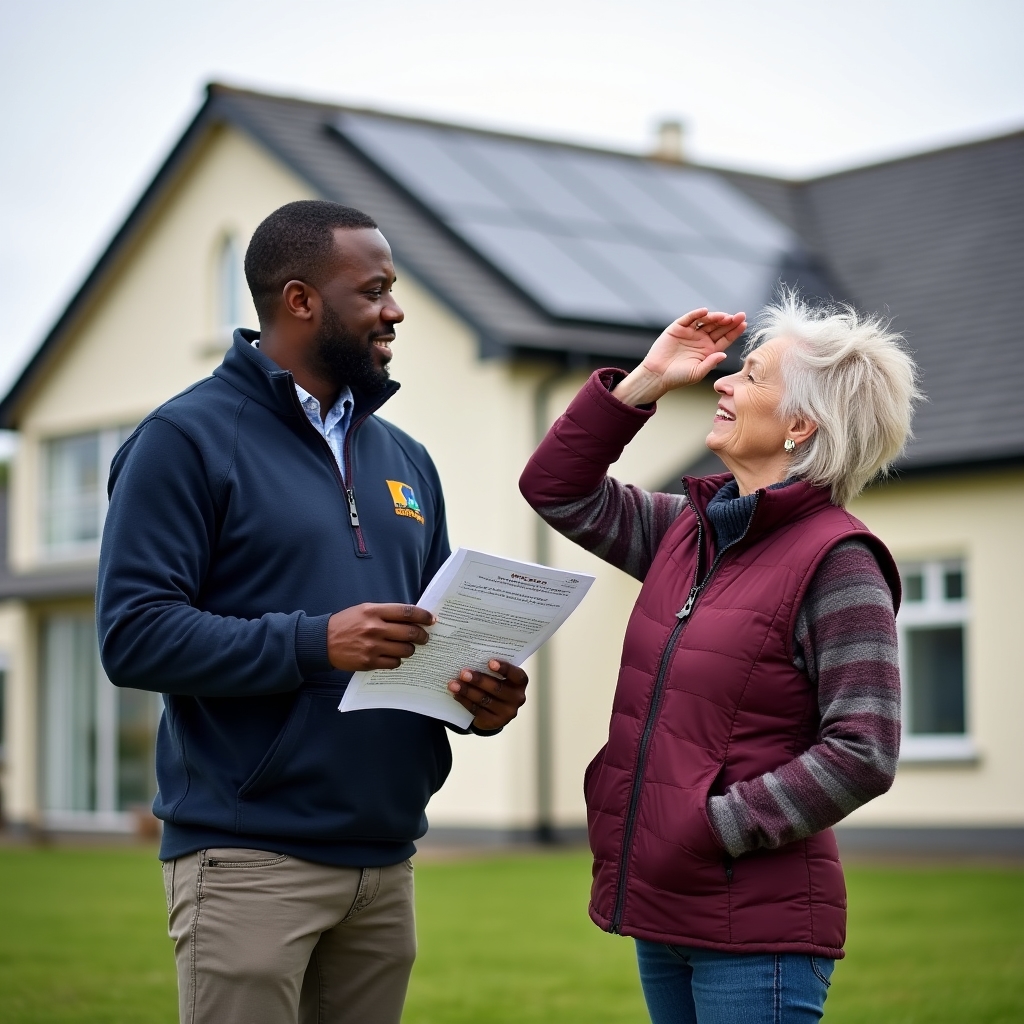
Is Your Building Suitable for Solar?

Not every building is equally suited to solar PV installation. Several factors influence both the technical feasibility and the economic viability of a system. Understanding these factors helps your committee make an informed decision about whether to proceed to a formal feasibility assessment.

Roof orientation

Solar panels generate most electricity when facing south. South-facing roofs in Ireland receive the most solar radiation over the course of a year. East and west-facing roofs can still be viable but will generate less electricity than an equivalent south-facing installation. North-facing roofs are generally not suitable for solar PV.

Roof pitch

The angle of your roof affects how directly panels face the sun. In Ireland, a pitch of between 30 and 45 degrees is generally considered close to optimal for annual generation. Flat roofs can accommodate solar panels using angled mounting frames, though this adds to installation cost.

Shading

Shading from trees, chimneys, neighbouring buildings or other structures significantly reduces solar generation. Even partial shading of a panel can affect the output of an entire string of panels in some system configurations. A shading analysis should be part of any proper feasibility assessment.

Roof condition and structure

Solar panels are installed for 25 years or more. If your roof covering is nearing the end of its life, replacing it before installing solar panels is advisable — removing and reinstalling panels for a roof replacement is costly. The structural capacity of the roof to carry the additional weight of panels and mounting systems should also be assessed.

Electricity consumption

Solar PV is most economically attractive when a significant proportion of generated electricity can be consumed on-site rather than exported to the grid. Buildings with consistent daytime electricity use — such as sports facilities with lighting, heating or catering — tend to benefit most from solar generation.

A formal feasibility assessment will evaluate all of these factors for your specific building and provide a clear picture of solar suitability before any commitment is made.

Planning Permission for Community Solar

Irish planning law provides for exempted development — categories of development that do not require planning permission. Solar panel installation falls within exempted development in many circumstances, but not all. Understanding the rules that apply to your building is important before proceeding.

When is solar PV exempt from planning permission?

The Planning and Development Regulations set out conditions under which solar panels on buildings are considered exempted development. These conditions typically relate to panel area, projection above the roof line, and the overall height of the installation. Where these conditions are met, planning permission is not required.

When is planning permission required?

Planning permission is required when the proposed installation exceeds the thresholds for exempted development, or when the building is a protected structure. Buildings on the Record of Protected Structures are subject to additional requirements, and any works that could affect the character of a protected structure require planning permission regardless of scale.

Architectural Conservation Areas

Buildings within an Architectural Conservation Area (ACA) may also be subject to additional planning requirements. Local development plans set out the specific rules for each ACA, which can vary between local authority areas.

The planning application process

Where planning permission is required, an application is made to the relevant local authority. Applications require detailed drawings, a planning report and, in some cases, a heritage impact assessment for protected structures. Local authorities typically have an eight-week decision period, though this can be extended where further information is requested.

Pre-application consultation

For complex cases, a pre-application consultation with the local authority planning department can clarify requirements before a formal application is made. This can save time and cost by identifying potential issues early.

Planning requirements vary by building type, location and proposed system size. Do not assume exemption applies — always verify the planning position before installation begins.

Evaluating Installer Quotes

Receiving multiple quotes for a solar installation is good practice, but comparing them meaningfully requires understanding what you're looking at. Quotes that appear similar in price can differ significantly in system quality, warranty terms and the scope of work included.

Panel quality and specifications

Solar panels are rated by their power output (measured in watts peak, Wp) and their efficiency. Higher-efficiency panels generate more electricity from the same roof area. Reputable manufacturers provide performance warranties guaranteeing a minimum output level after 25 years. Check that quoted panels come from established manufacturers with a track record of honouring warranty claims.

Inverter type and quality

The inverter converts direct current from the panels into alternating current for use in your building. String inverters are the most common type for community-scale systems. Microinverters, fitted to each panel individually, can improve performance where shading is an issue. Inverter quality and warranty length vary significantly between manufacturers.

Mounting system

The mounting system secures panels to your roof. It should be appropriate for your roof type — pitched tile, flat, metal sheet or other — and should meet relevant structural and wind loading requirements. A poorly specified mounting system can cause roof damage or panel movement over time.

Grid connection

Connecting a solar system to the electricity grid requires notification to or agreement with your network operator (ESB Networks in most cases). Check that quotes include the cost of grid connection work and any required metering upgrades.

What to watch for

Be cautious of quotes that are significantly cheaper than others without a clear explanation. Check that quotes are inclusive of VAT, grid connection, commissioning and handover documentation. Verify that the installer is registered with SEAI as an approved installer if grant funding is involved.

Comparing quotes on a like-for-like basis requires a consistent technical specification. We prepare this specification as part of our procurement service, ensuring all installers quote on the same basis.

Managing a Solar Project as a Voluntary Committee

Voluntary committees are experienced at running organisations, organising events and managing facilities. Managing a construction project is a different kind of challenge — one that requires technical knowledge, contractor management experience and familiarity with regulatory processes that most volunteers don't have.

What makes community solar projects different

A solar installation is a capital project with a design phase, a procurement phase and a construction phase. Each phase has its own decisions, risks and documentation requirements. Unlike organising a fundraiser or maintaining a pitch, the consequences of errors in a solar project can be costly and long-lasting — a poorly installed system may underperform for decades, or a missed planning requirement may create legal complications.

Common challenges for committees

Committees often struggle with evaluating technical information from installers, managing grant application requirements, understanding planning obligations and maintaining oversight of installation quality. These are specialist areas, and there is no reason to expect volunteers to be proficient in them.

How to structure committee involvement

Effective committee involvement in a solar project focuses on decision-making rather than technical management. The committee should understand the project at a high level, approve key decisions (such as which installer to appoint) and be kept informed of progress. The technical coordination work should be handled by someone with the relevant expertise.

Keeping your committee informed

Regular, clear updates are important. Committee members should know what stage the project is at, what decisions are coming up and what the current timeline looks like. Detailed technical information should be summarised in accessible terms — not presented as raw data that requires specialist knowledge to interpret.

The most effective community solar projects we've seen involve committees that make decisions confidently because they're well-informed — not committees trying to manage technical details outside their expertise.

Have a Question Not Covered Here?

These guides cover the most common questions we hear from community organisations. If your situation raises questions not addressed here, we're happy to discuss them directly.

Contact Us
Solar consultant discussing project options with community organisation representatives outdoors